Beyond the Color Code: Understanding the Different Types of Automotive Paint Finishes
You’ve found your car’s OEM paint code, but you’re still left with questions. Why does a red Mustang look different from a red Honda? The answer lies not just in the color, but in the type of paint finish. Automotive paint isn’t a one-size-fits-all product. The finish type gives your car its unique personality and sparkle.
At Complete Auto Care, we believe that understanding your paint is key to a perfect repair. Here’s a breakdown of the most common automotive paint finishes.
1. Solid Colors: The Foundation
Solid colors are the simplest and most traditional type of automotive finish. They contain no added metallic or pearl particles, just a pure, single pigment. Think classic white, black, or red.
- Characteristics: Simple, bold, and uniform. The color looks the same from every angle.
- Pros: They are generally the easiest to mix and match. Repairs are straightforward, as you don’t have to worry about flake orientation.
- Cons: They lack the “depth” or “pop” of other finishes.
- Best For: Classic restorations, commercial vehicles, and drivers who prefer a clean, timeless look.
2. Metallic Finishes: The Sparkle
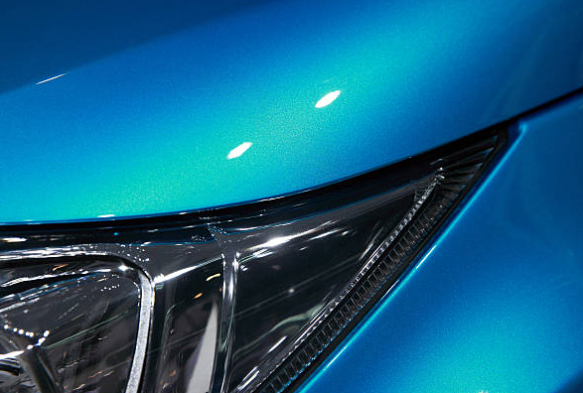
Metallic paint is the most common finish on the road today. It contains tiny, flat aluminum flakes that reflect light, giving the paint a sparkling or shimmering effect.
- Characteristics: The finish appears lighter or darker depending on the angle and how light hits the flakes.
- Pros: Adds depth and visual interest to the car’s body lines.
- Cons: Can be more challenging to touch up. The orientation of the metallic flakes must be just right to avoid a blotchy or mismatched repair.
- Best For: The vast majority of modern vehicles. A good urethane base coat with metallic flakes provides a stunning, multi-dimensional look.
3. Pearl Finishes: The Iridescent Shimmer
Pearl finishes, also known as pearlescent or mica paints, take the idea of metallics a step further. They contain ceramic or mica crystals that not only reflect light but also refract it, creating a soft, iridescent glow and a color-shifting effect.
- Characteristics: The color can seem to change slightly as you move around the vehicle, often showing subtle hues of different colors.
- Pros: Creates a luxurious, multi-dimensional, and unique look.
- Cons: The most challenging finish to repair and match. Often requires a tri-coat paint system with a special mid-coat to achieve the correct effect.
4. Special Finishes: Beyond the Rainbow
Beyond the main three, there are other, more complex finishes for enthusiasts and custom projects. This includes “chameleon” or “color-shifting” paints that dramatically change color depending on the viewing angle, and matte or satin finishes that absorb light instead of reflecting it. These specialty paints require expert application and careful urethane clear coat selection to maintain their unique appearance.
Understanding your paint’s finish is crucial for choosing the right products for your repair. When you select your touch-up paint kit from us, you can rest assured that our OEM paint is custom-mixed not only to your color code but also to your specific paint finish type.
For all your automotive paint needs, from a solid color to a stunning pearl, visit us at www.completepaintcare.com We have the right products for a perfect repair every time.